🏢 When Bad Neighbours Become a Legal Problem: A Landmark WA Strata Case
Updated: May 20
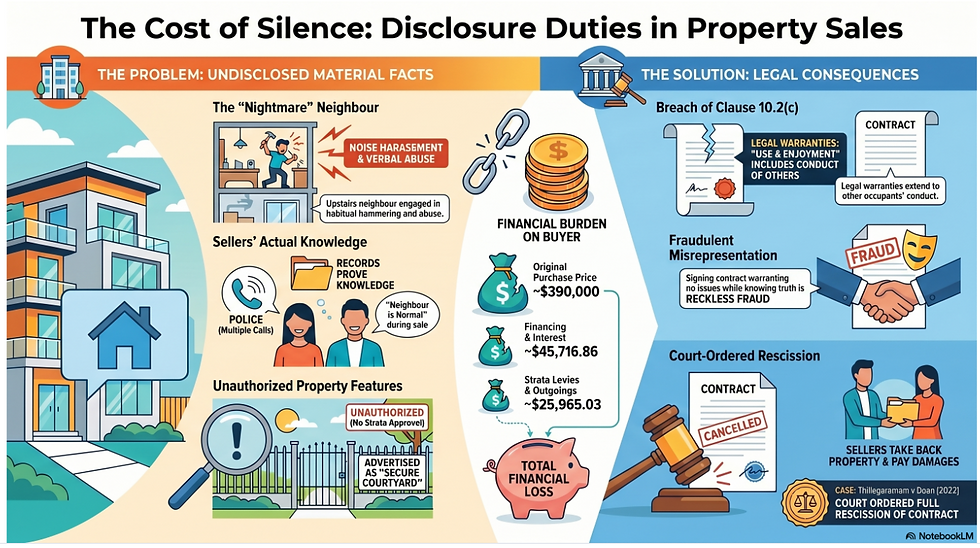
Living in strata comes with shared walls, shared spaces… and sometimes shared headaches. 😅 But what happens when a neighbour’s behaviour goes far beyond occasional noise and becomes a serious interference with daily life?
The Supreme Court of Western Australia explored exactly that issue in the case of Thillagaratnam v Doan — a decision that has become highly relevant for strata owners, buyers, sellers, and strata professionals alike.
📖 The Background
In 2015, Sarah Thillagaratnam purchased a ground-floor strata unit in Perth. Shortly after moving in, she experienced ongoing abusive and disruptive behaviour from the upstairs neighbour, Laurence Pratt.
According to the judgment, the behaviour included:
🔊 Yelling and verbal abuse🔨 Hammering on the floor for extended periods📺 Loud music and television noise😡 Intimidating conduct toward residents and visitors👮 Frequent police involvement
The court found that this behaviour had been occurring for many years — well before the sale of the property.
Importantly, the previous owners had experienced the same issues during their occupation of the property and had contacted both police and the strata manager regarding the neighbour’s conduct.
⚖️ The Key Legal Question
The central issue became:
❓ Did the sellers have an obligation to disclose the neighbour’s behaviour before the sale?
The contract included a standard clause stating that the sellers did not know of anything that would “materially affect” the buyer’s use or enjoyment of the strata lot.
The sellers argued that neighbour disputes were simply part of apartment living and that they were not required to disclose those issues.
The court disagreed.
🧑⚖️ What the Court Found
Justice Curthoys held that the neighbour’s conduct was so severe and ongoing that it clearly fell within the scope of matters materially affecting the buyer’s use and enjoyment of the property.
The court found that:
✅ The sellers knew about the behaviour✅ The behaviour materially affected the property✅ The sellers failed to disclose it✅ The failure amounted to a breach of contract✅ The representation made in the sale contract was false
The judge also concluded that the sellers’ conduct amounted to fraudulent misrepresentation because they signed the contract despite knowing the statement was untrue.
As a result, the buyer was entitled to rescind the contract and seek damages.
🏠 Why This Case Matters for Strata
This case highlights a major issue in strata living:
🚨 Not all defects are physical.
A leaking roof, cracking walls, or concrete cancer are easy to identify. But behavioural issues — particularly severe nuisance behaviour — can be just as damaging to someone’s ability to peacefully enjoy their home.
The court made it clear that persistent antisocial behaviour in a strata complex can become a material fact that sellers may need to disclose.
🛒 Lessons for Buyers
If you are purchasing in strata:
✅ Read AGM minutes carefully✅ Review strata records thoroughly✅ Ask direct questions about nuisance complaints✅ Visit the property at different times of day✅ Speak with neighbours where possible
Sometimes the biggest risks in strata are not visible during a 15-minute home open. 👀
🏡 Lessons for Sellers
For sellers, this case is a warning that silence can create significant legal exposure.
If there are known issues that materially impact use and enjoyment of the property, failing to disclose them may result in:
⚠️ Contract disputes⚠️ Claims for damages⚠️ Rescission of the sale⚠️ Allegations of misleading conduct or fraud
Trying to “push through” a difficult sale without disclosure can become far more expensive later.
📂 Lessons for Strata Managers & Councils of Owners
This case also reinforces the importance of proper record keeping.
📧 Emails📋 Meeting minutes👮 Police reports📝 Complaint records
…all became critical evidence in the proceedings.
Good governance and accurate records matter — particularly where nuisance behaviour escalates over time.
💬 One of the Most Powerful Comments in the Judgment
Interestingly, the judge opened the decision with a sobering reflection on litigation itself:
“This case illustrates the folly of litigation.”
Despite ultimately succeeding, the buyer faced enormous legal costs, while the sellers risked bankruptcy. The judgment serves as a reminder that unresolved disputes in strata can become financially and emotionally devastating for everyone involved.
🧠 Final Thoughts
Strata living works best when communities function cooperatively. 🤝 But when serious nuisance behaviour develops, the impacts can extend far beyond inconvenience.
Thillagaratnam v Doan is an important reminder that transparency matters in property transactions — and that “peaceful enjoyment” is not just a nice concept in strata living, but something the courts are prepared to protect.
Read here:
🎧Prefer to listen: https://static.wixstatic.com/mp3/a0f1d2_125f065e04aa43a6b1ccfcb8a2fdde40.m4a


Comments