A Good Strata Manager Doesn’t Make the Decisions — They Help the Council Make Better Ones
One of the most misunderstood parts of strata management is the role of the strata manager versus the Council of Owners (COO).
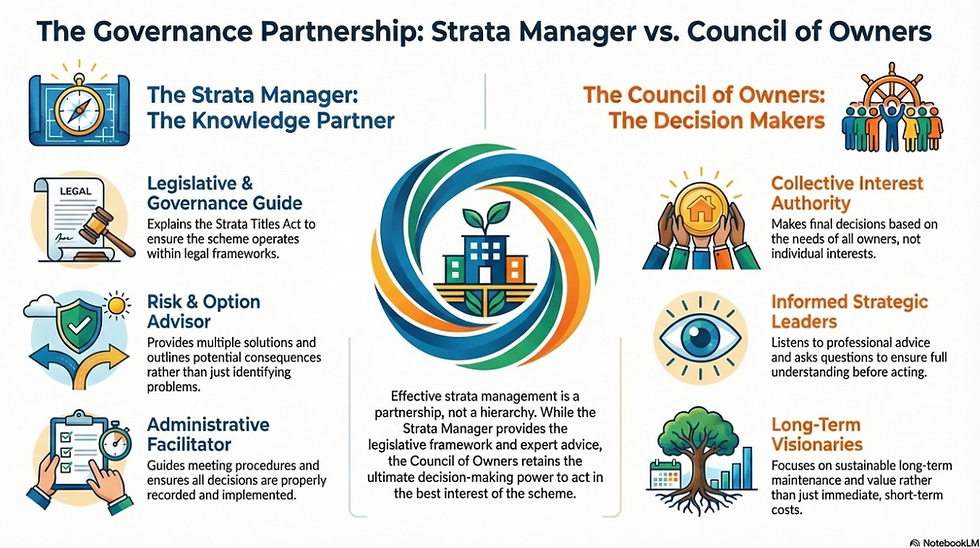
A good strata manager is not there to make the decisions for the council. They are there to provide advice, explain the options, outline the risks, and make sure the council is operating within the legal framework of the Strata Titles Act. The decisions should always remain with the Council of Owners.
The best working relationships in strata are where the council is empowered to make informed decisions, not where everything is handed over to the manager, and not where the manager simply processes instructions without guidance.
A good strata manager should:
Explain what the Act says and what the scheme can and cannot do
Provide options, not just problems
Outline risks and potential consequences of decisions
Help the council prioritise works and spending
Guide meeting procedures and governance
Ensure decisions are properly recorded and implemented
Speak up if a decision may be outside the Act or create risk for the scheme. Even better is when a strata manager can point to similar cases that have been before the SAT, so that strata councils can see how these situations have been handled in practice.
At the same time, a good Council of Owners should:
Make decisions in the best interests of the scheme, not individual owners
Listen to professional advice, including engaging a legal professional when the matter goes beyond what a strata manager can advise on
Ask questions when they don’t understand something
Focus on long-term maintenance, not just short-term costs
Keep a close eye on the financials. Well-run schemes should be budget-driven, not reliant on special levies, and reserve funds should never be used to plug administrative fund shortfalls. Proper budgeting and long-term planning are key indicators of a well-managed strata company.
Remember, they are making decisions on behalf of all owners
Strata works best when there is a partnership. The manager provides the knowledge, structure, and legislative guidance, and the council provides the direction and decisions on behalf of the owners.
The goal is not for the strata manager to control the building, and not for the council to operate without guidance — the goal is good governance, good decision-making, and a well-maintained scheme.
When that balance is right, strata communities run smoothly. When it’s not, that’s when problems usually start.


Comments